
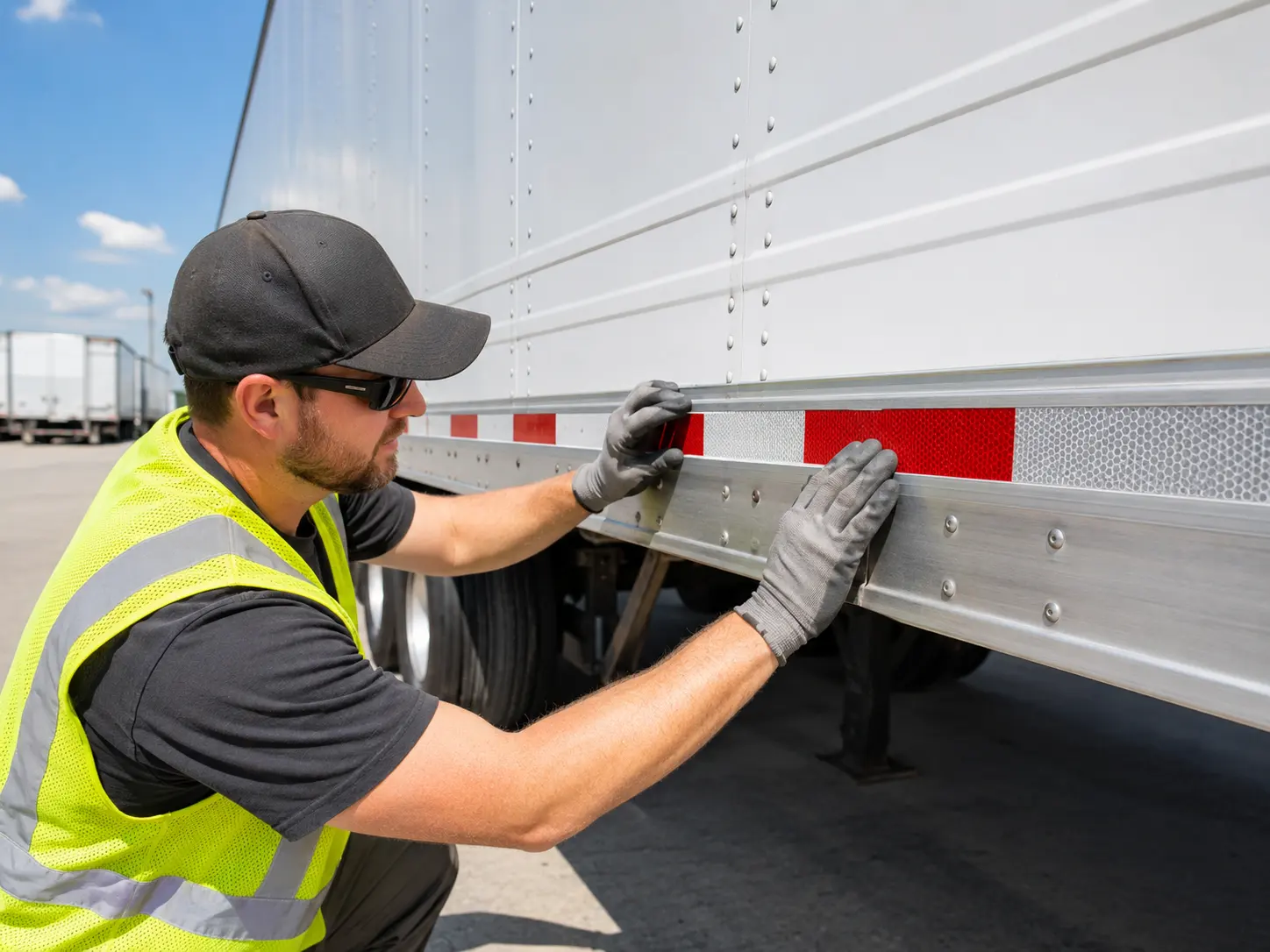
Warm, bright summer days can be a great time to refresh reflective tape on trucks and trailers. Longer daylight hours make inspections easier, heat helps surfaces dry faster, and fleet maintenance schedules often open up before peak hauling season begins. But the heat, humidity, road film, and sudden summer rain can also affect how well new reflective tape bonds to a vehicle’s surface.
If your new tape has begun to peel quickly, it may not be a result of quality issues. Instead, the installation environment may be the main culprit. With the right surface preparation, temperature consideration, and application technique, you can help reflective conspicuity tape adhere properly and perform reliably on the road.
How to Install Reflective Tape in the Summer
1. Gather your materials and tools
Before starting the process, ensure you have the correct tape for the job. The Federal Motor Carrier Safety Administration (FMCSA) mandates alternating segments of red and white DOT-C2 reflective tape, though all-white tape is applicable in some locations on trucks and trailers.
In addition to your white or red and white DOT-C2 reflective tape, ensure you have a sharp knife or scissors, a rubber roller or other firm applicator, clean lint-free towels, and a mild detergent and clean water.
If you have recently painted, wait to install until the coat is mostly cured. If you smell strong solvent fumes or can leave a small impression in the paint, it’s too soon to install reflective tape. Applying tape over paint that is too fresh can cause the adhesive to fail to create a proper seal or even fall off.
2. Wash away dirt, road film, and grease
Summer heat can bake road grime, diesel residue, wax, and old cleaning products onto trailer surfaces. Wash the application area with mild detergent and water, then rinse thoroughly with clean water. Any soap film left behind can interfere with adhesion, so ensure the area is completely dry before application.
3. Check the surface temperature
A comfortable summer day can still produce an extremely hot trailer panel in direct sunlight. Vehicle surfaces must typically be between 40 and 85 degrees for tape application, but the surface temperature can be higher than expected.
If the truck or trailer surface is too hot to touch comfortably, wait until later in the day, move the vehicle indoors, or apply the tape in the shade. Applying reflective tape to an overheated surface can cause the adhesive to grab too quickly, increasing the risk of wrinkles, bubbles, and misalignment.
4. Apply with firm, overlapping pressure
Mark the tape path before peeling the liner and cut clean sections with a sharp blade or scissors. In especially hot weather, avoid holding long exposed adhesive sections in your hands. The adhesive could soften and stretch slightly, making straight application harder.
Peel back a small portion of the liner, position the tape, and lightly tack it in place. Remove more liner as you work across the panel. Use the roller or other firm applicator to make firm, overlapping strokes from the center outward. Consistent pressure helps the adhesive wet out against the surface and reduces trapped air.
DOT-C2 Reflective Tape that Lasts
Whether you are refreshing a single trailer or stocking up for a full fleet, choosing the right reflective tape and installing it correctly matters. Briargate Supply has a full line of federally mandated DOT-C2 reflective conspicuity tape available in a variety of configurations.
Briargate Supply is an industry leader in premium DOT-approved reflective tape. Whether you need a full roll, kiss cut, or specific dimensions, our wide selection of products can meet your industry-specific needs. Contact us today to discuss your options.