
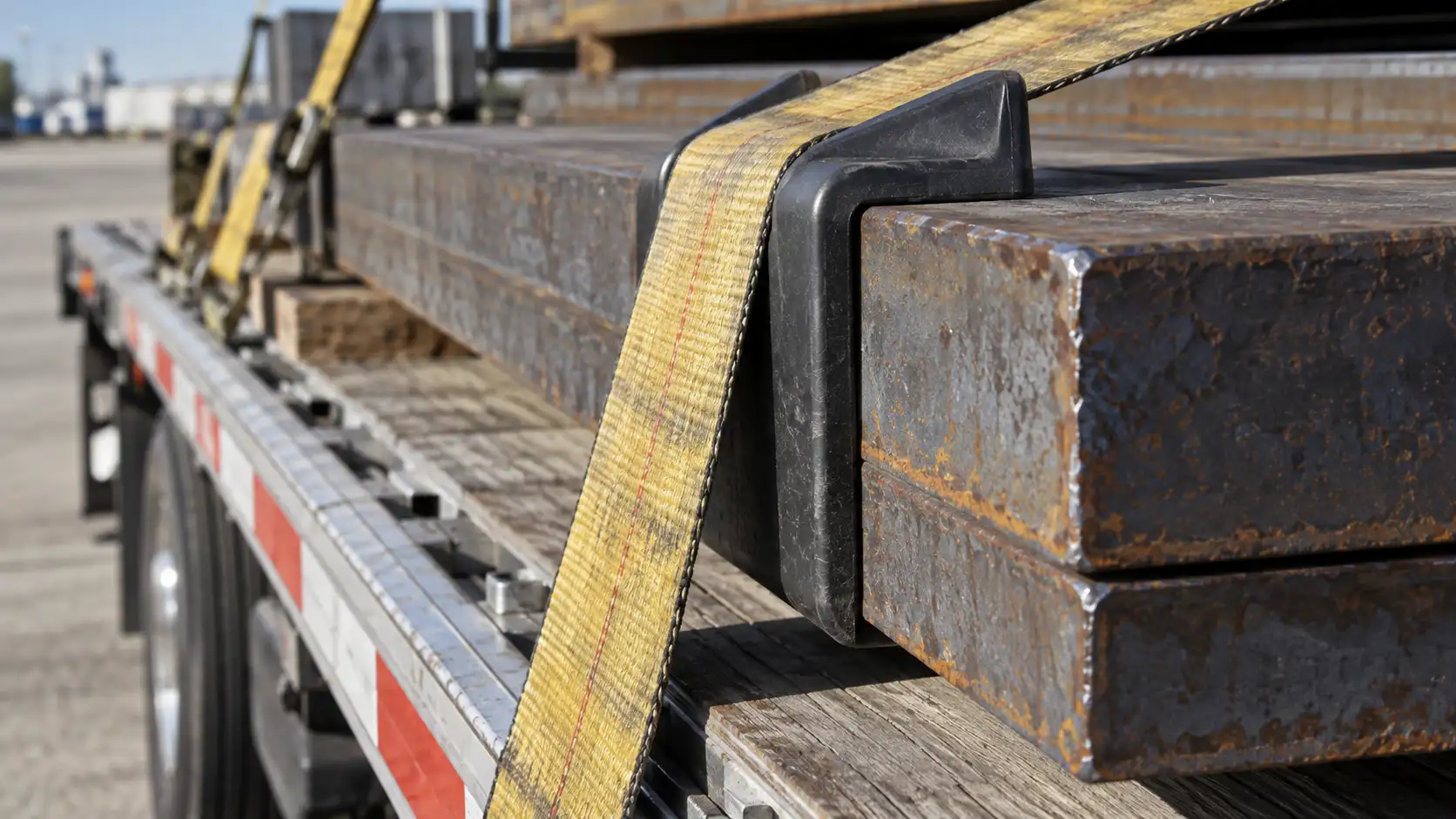
Winch straps are built for demanding flatbed work, but one overlooked contact point can shorten their service life quickly. When tensioned webbing presses against the edge of steel, lumber, masonry, or another tough material, normal road movement can turn that edge into a wear point. The result can be fuzzed fibers, cuts, damaged stitching, and straps that must be removed from service sooner than expected.
How can you solve this problem? A small, reusable piece of protection can help preserve your securement equipment, protect the cargo surface, and support a more reliable tie-down setup.
Why Winch Straps Wear Out at Cargo Edges
A loaded winch strap carries substantial tension. At a corner, that force is concentrated into a much smaller area. Add vibration, load settling, and minor strap movement during transit, and the webbing can repeatedly rub against the same surface. Even an edge that doesn’t appear to be razor-sharp can damage synthetic fibers under tension.
Watch for warning signs like fraying, broken fibers, melted or glazed areas, damaged seams, and illegible identification markings. Inspect tie-downs before use and follow the manufacturer’s removal-from-service criteria. A compromised strap is not repaired simply by changing its position on the next load.
How Corner Guards Increase Winch Strap Durability
A corner guard creates a barrier between the winch strap and the cargo edge. Instead of allowing webbing to bear directly against an abrasive surface, the guard spreads contact over a broader area and provides a smoother path for the strap.
- Reduces abrasion: Separates webbing from rough, sharp, or unfinished edges
- Distributes strap pressure: Spreads force over a wider surface instead of concentrating it at one corner
- Protects cargo: Helps limit strap marks, crushed packaging, and edge damage on suitable loads
- Supports consistent positioning: A properly matched guard can help keep the strap aligned across the corner
- Lowers avoidable replacement costs: Less edge wear can mean fewer prematurely retired straps and less downtime replacing equipment
Edge Protection is More Than a Cost-Saving Accessory
Federal Motor Carrier Safety Administration (FMCSA) cargo-securement rules require edge protection whenever a tie-down would be subject to abrasion or cutting where it meets cargo. The protection must resist abrasion, cutting, and crushing. That makes the right guard part of a properly planned securement system.
Keep in mind that corner guards don’t increase a strap’s rated working limit, and they cannot make a damaged tie-down serviceable. Always follow applicable regulations, your company’s procedures, and the instructions supplied by the cargo-control equipment manufacturer.
How to Choose the Right Corner Guard
Selecting the correct edge protection comes down to a few key factors.
Match the Guard to the Strap Width
The strap should sit fully within the guard’s intended contact areas without folding, bunching, or riding off the side. Confirm compatibility with your 2-inch, 3-inch, or 4-inch winch straps before purchasing.
Match the Material to the Load
Plastic guards are lightweight and practical for many common flatbed applications. Rubber or reinforced options can add grip and help protect finished surfaces. Steel and other heavy-duty designs may suit harsher edges or different securement hardware. Only use products rated and recommended for the specific application. Tie-down corner guards are not automatically suitable for overhead lifting.
Check the Length and Coverage
The protector must cover the full area where the strap could contact the edge. Longer guards or V-shaped boards can also help distribute pressure across vulnerable materials or stacked freight.
Consider Weather and Handling
Choose guards suited to the temperatures, moisture levels, chemicals, and repeated handling they will encounter on your typical routes. Features like strap slots, high-visibility colors, and placement-tool compatibility can make routine setup easier.
The Result? Fewer Preventable Strap Failures
Replacing a worn strap is part of responsible fleet maintenance. Replacing straps early because the same unprotected corners keep chewing through the webbing is avoidable and unnecessary. Corner guards are a low-complexity addition that can help extend equipment life, reduce cargo damage, and make securement practices more consistent across drivers and loads.
Before your next haul, count the edge-contact points as well as the straps. Stock enough compatible corner guards for both sides of each tie-down, plus spares for damaged or missing equipment.
If you have no protectors in a pinch, double up and fold heavy-duty cardboard to place between the strap and the cargo. A little barrier is better than no protector at all.
Protect Your Straps Before the Edge Wins
If it’s time to replace worn-out cargo straps, Briargate Supply can help. Our experienced team can recommend the right cargo control solutions for any load, from ratchet cargo straps and durable bungee cords to custom logo-printed winch straps.
Don’t let cargo edges cause unnecessary strap damage. Contact us today to learn how to protect your cargo and equipment.