
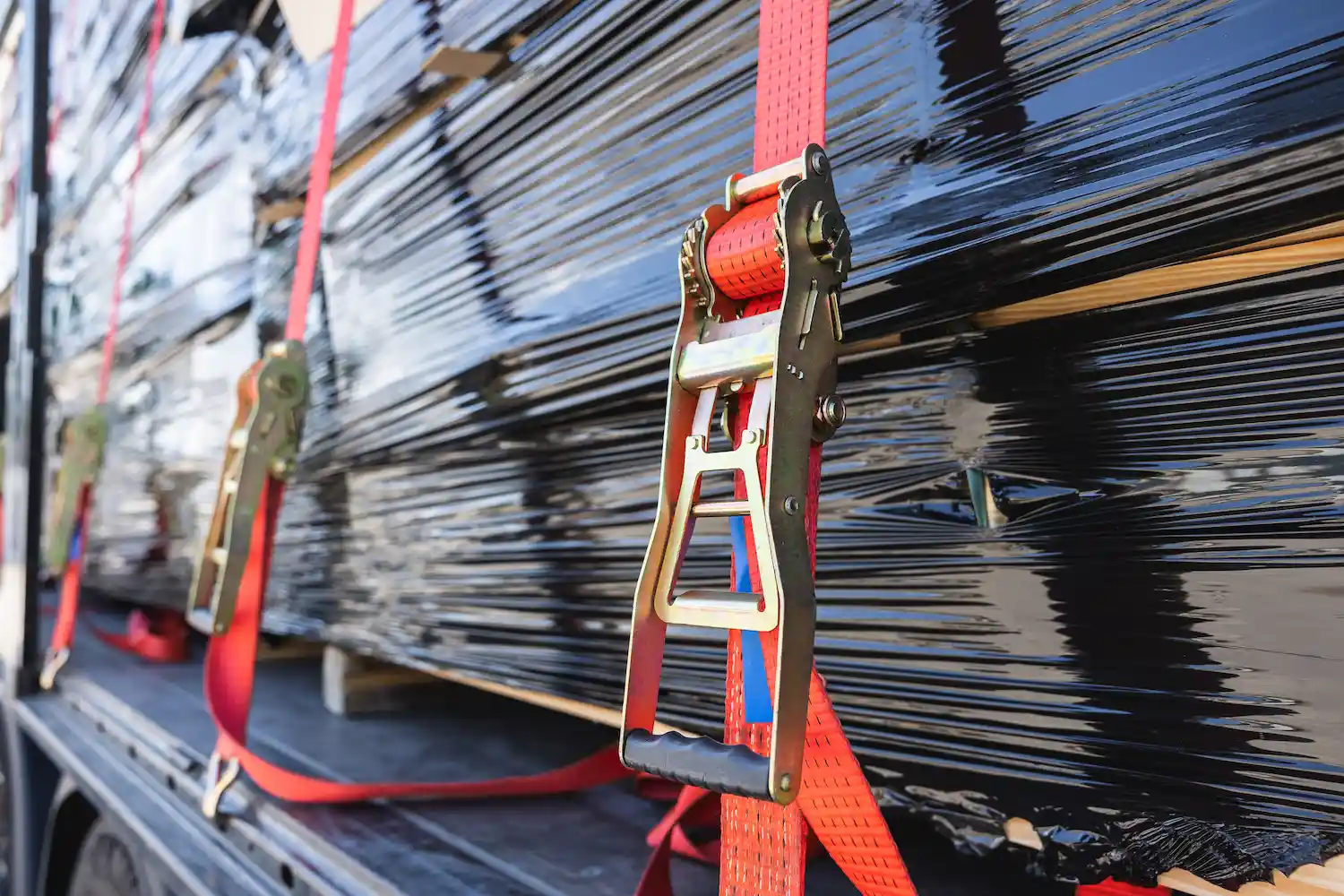
Whether they are used on a flatbed trailer or in combination with E-track and winch systems, cargo straps are crucial to safety and security in long-haul trucking. The materials used determine how well the straps hold tension, resist weather, and protect freight during transport.
The most common cargo straps combine synthetic webbing with heavy-duty metal hardware, creating a tie-down system that is strong, flexible, and reliable when used within its rated working load limit.
The Main Material: Synthetic Webbing
The flat, woven portion of a cargo strap is the webbing. For trucking applications, the webbing is usually made from synthetic fibers like polyester, nylon, or polypropylene. These materials are used because they offer strength without the weight and stiffness of chains or cables. Synthetic webbing also bends easily around cargo, making it useful for securing machinery, lumber, pallets, and other freight.
Polyester: The Industry Standard Cargo Strap Material
Most heavy-duty cargo straps are made with polyester because it has high tensile strength, low stretch, good abrasion resistance, and durability while exposed to sunlight and moisture.
Polyester also resists mold, mildew, and water absorption better than many natural fibers. For flatbed trucking, where straps are exposed to rain, road grime, direct sun, and temperature changes, this durability makes all the difference.
Nylon versus Propylene Cargo Straps
Nylon is a strong synthetic material, but it stretches more than polyester. That elasticity can be useful in some lifting, recovery, or shock-loading applications, but it is often less desirable for standard cargo securement where the goal is to maintain firm, steady tension. Nylon can also be more affected by moisture and sunlight over time.
Polypropylene is lightweight and water resistant, so it is often a good choice for lighter-duty applications. However, it generally doesn’t offer the same abrasion resistance or performance as polyester. For professional trucking and frequent use, polyester usually provides the best balance of strength, stability, and durability.
Extra heavy-duty straps can be dipped into a latex or polyurethane coating, which significantly increases abrasion resistance. This does, however, make the straps much stiffer and less flexible.
Metal Hardware: Ratchets, Hooks, and Fittings
Ratchet mechanisms, winch fittings, flat and wire hooks, chain extensions, and D-rings are commonly made from steel. It can withstand high tension and use, and is often zinc-plated or coated to help resist rust and corrosion.
Steel hardware gives cargo straps their mechanical advantage. A ratchet handle tightens the strap and locks tension in place, while hooks and fittings connect the strap to anchor points on the trailer or cargo system. If that hardware is weak, rusted, bent, or poorly matched to the strap, the entire tie-down system can become unsafe.
Stitching, Labels, and Protective Features
The webbing is folded and sewn with heavy-duty thread to secure end fittings and create strong connection points. Quality stitching helps distribute force across the strap assembly, reducing the risk of tearing at high-stress points.
Commercial straps also include a sewn-in identification tag that shows key information. Working load limit, strap length, manufacturer details, and relevant standards or ratings help drivers meet Federal Motor Carrier Safety Administration (FMCSA) requirements.
Custom logo printed winch straps allow companies to personalize the straps used by their fleets, bringing branding and durability together in a perfect combination.
Why Cargo Strap Material Matters
The materials in a cargo strap affect more than just strength. They influence how the strap handles sun exposure, rain, abrasion, sharp edges, temperature changes, and repeated tightening. A polyester strap with quality steel hardware is designed to maintain tension and resist the environmental conditions common in trucking. However, even the best material and high-quality strap can fail if the strap is cut, frayed, overloaded, or used against sharp cargo without edge protection.
If it’s time for your drivers or full fleet to replace worn-out cargo straps with new, durable cargo control products built for the road, Briargate Supply can help. We specialize in providing dependable, high-performance cargo and winch straps to meet your needs. Contact us today to learn more about your options and find the best cargo control solutions for your fleet.