
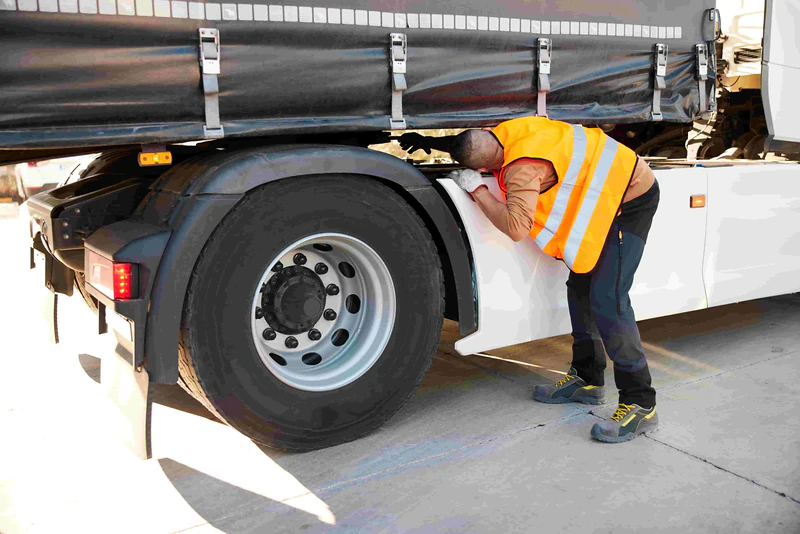
In the trucking industry, accessories are not just add-ons, but part of the safety system that keeps trucks, trailers, and drivers protected on the road. Mud flaps, brackets, lighting, reflective tape, safety chains, load securement hardware, and other components all play a role in safe operation. When even one part is damaged, loose, or overlooked, the consequences can be severe.
Federal rules require motor carriers to systematically inspect, repair, and maintain vehicles and safety-related parts and accessories, and drivers may not operate a commercial vehicle unless those authorities are satisfied those parts are in good working order. And it’s not just to be picky or controlling, but to ensure the safety of everyone on the road.
Why Accessory Safety Cannot Be Optional
In 1994, a couple and their six young children were driving on I-94 through Milwaukee, somewhere behind a truck driven by a driver who had paid a bribe to obtain his commercial driver’s license. Unfortunately, that meant he did not know of and adhere to the necessary safety rules and regulations, and a 30-pound bracket meant to hold the truck’s mud flap in place broke loose. The family’s minivan ran over the bracket, which punctured the gas tank and ignited a fire that tragically took the lives of all six children.
The incident is a sobering reminder that safety depends more on the truck itself. Competent drivers, valid licensing, proper training, and disciplined inspection of every truck accessory and attachment that could affect safe operation is crucial to prevent accidents from happening on and off the road.
The Role of Training and Licensing
Professional drivers need more than just experience. The Federal Motor Carrier Safety Administration (FMCSA) has clear guidelines on driver’s license standards and special training requirements, while pre-trip inspection rules require drivers to confirm that parts and accessories are in safe working order before operating the commercial vehicle.
In practice, this means that a driver should know how to spot missing hardware, damaged brackets, worn couplers, defective reflectors, damaged reflective tape, and other equipment issues before a truck leaves the yard.
Why Regular Inspection Matters
As a best practice, fleet safety inspections should occur at three levels: during pre-trip checks, preventive maintenance service intervals, and annual inspection preparation. A strong culture of inspection and preparation protects drivers, supports compliance, and extends equipment life.
Common routine inspections include the following:
- Check mud flaps and mounting brackets for cracks, looseness, or missing hardware.
- Verify marker lights, brake lights, and reflective elements are clean, secure, and working.
- Inspect trailer couplers, safety chains, and electrical and air connections for wear or damage.
- Look for loose accessory mounts, bent supports, and corrosion on exposed metal components.
- Confirm load securement accessories are present, undamaged, and rated for the intended job.
- Review prior inspection reports and document and changes or defects.
Safety Protects More Than Compliance
The best operators treat fleet safety inspections as a requirement instead of minor inconvenience. When drivers are properly licensed, teams are trained, and inspection routines are taken seriously, fleets reduce risk and build a stronger reputation for reliability.
If it’s time to upgrade accessories or critical components on any of your fleet vehicles, Briargate Supply has the products you need and knowledge to help you select the right one for your commercial vehicles. From mud flaps to DOT-approved reflective tape, the right parts can make a measurable difference in safety, uptime, and peace of mind. Give us a call at 866-506-4781 or contact us today to discuss your options.