
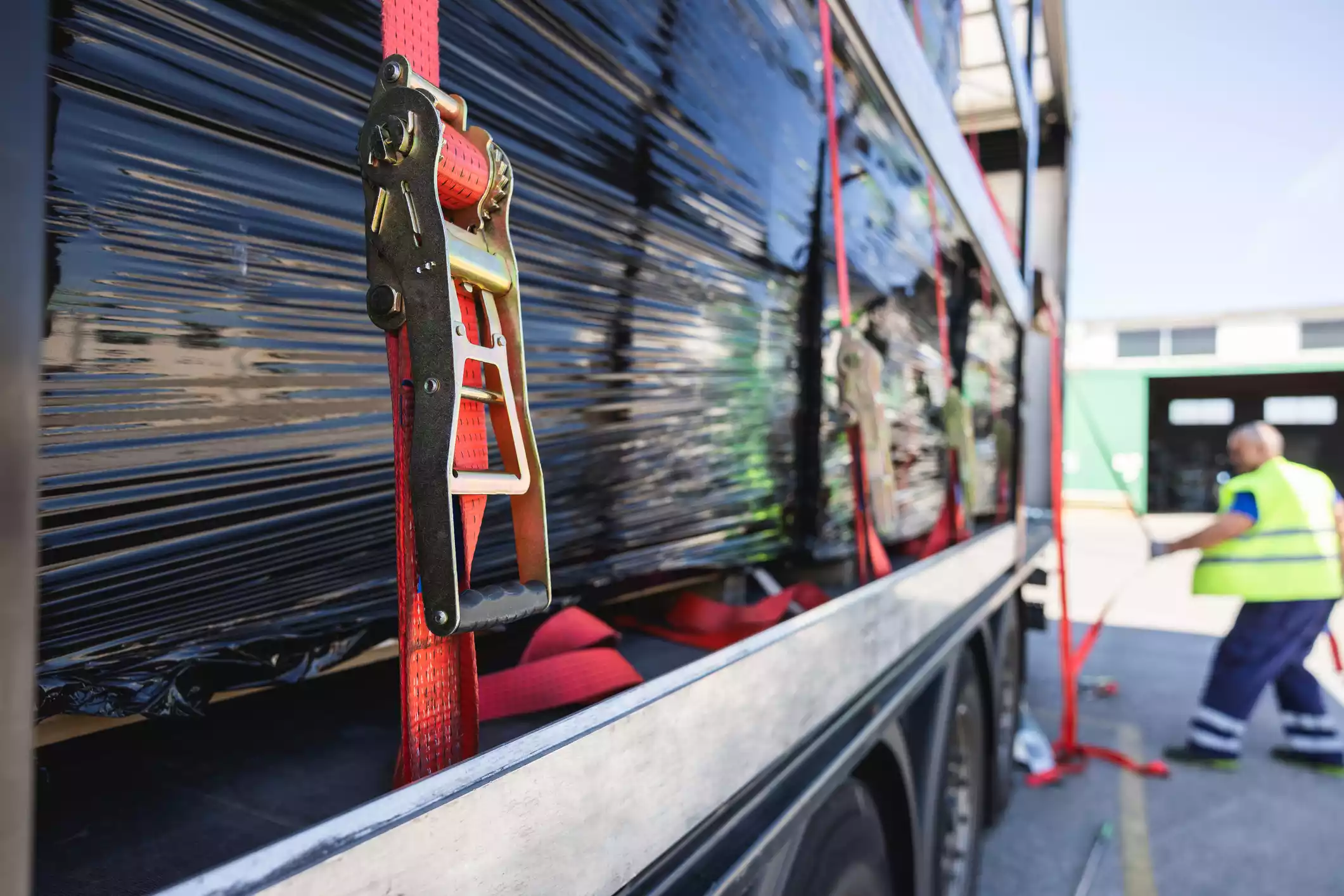
When it comes to securing loads, options range from bungee cords to winch straps and cargo straps. Knowing the correct one to use and how to use it can spell the difference between having your load properly fastened down or risking damage to what you’re hauling as well as to other vehicles on the road, not to mention running afoul of mandated guidelines.
Types of Cargo Straps
Cargo straps, also called ratchet straps or cargo tie-down straps, are made of high quality, industrial grade webbing. Ratchet straps come in 2”, 3”, and 4” widths (the 2” and 4” are most common), in a variety of lengths and in 3 colors: yellow, grey and blue.
The straps feature a ratchet buckle mechanism near one end which is used to manually tighten the strap. When properly secured, it’s virtually impossible for ratchet straps to release.
Winch straps are made in the same widths as noted above. However, winch straps are rolled up on a winch mechanism that is fixed or sliding on the side of the trailer. These winches are tightened with a winch bar that is inserted into holes in the winch mechanism. Winch straps are usually very heavy duty and used most commonly on commercial large flatbed trailers.
Please note that many commercial drivers will use the term “winch” and “ratchet” interchangeably. There is a significant difference between the two as noted above. When purchasing straps be sure to review photos of the final product so you get straps you need!
End hook types include flat hooks, chain anchors, wire hooks and flat hooks with abrasion clips. The E series 2” ratchet strap is designed specifically for use inside semi-trailers and clips into the horizontal rails (E-track) to secure loads. Generally speaking, the flat hook is the most commonly used type of end on cargo straps.
How to Properly Use Cargo Straps
A tool is only as good as its user, and that applies to ratchet straps. Drivers must be trained in proper load securement procedures, with that training documented by fleet managers. This will demonstrate compliance during audits or roadside checks. And of course, the ratchet straps must meet industry standards.
To keep your cargo straps in the best condition, avoid the following:
- Knots tied in straps which will weaken the material
- Strap ends flailing wildly in the wind or the strap itself vibrating, which will weaken the entire fiber structure. To stop strap vibration, simply twist the strap 360 degrees before tightening. This will stop most vibrations.
- Straps left outside for multiple seasons, where freezing conditions, water and UV damage can take a toll
It is also important the strap has the correct weight rating for the load you’re securing. Straps are rated by Working Load Limit (WLL). For example, an 8,000-pound load requires four 2,000-pound rated straps. Don’t go by break strength. That’s the absolute maximum point at which a strap will break—a level you don’t want to reach!
Maintenance and Storage
When not in use, straps should be neatly rolled up and stored in a dry toolbox or inside your vehicle.
As for the metal ratchet mechanism, periodically give it a quick shot of a spray lubricant like WD-40. It will provide protection against corrosion and let the mechanism work more smoothly.
Equally important is to maintain inspection records, showing when the straps were inspected for wear and proper tension.
Cargo straps may be strong, but they aren’t indestructible. Eventually, they will show signs of wear due to age: cuts, worn sections or fraying. Those are all indicators that it’s time to replace them.
Choose Cargo Straps from Briargate Supply
While you could choose your basic ratchet strap, you might consider kicking it up a notch by having it custom branded with your name or logo. Branding your straps and other accessories gives a perception of quality, helps to reduce loss or theft, and helps build name recognition, among other value-added aspects.
When you’re ready to choose the right ratchet strap for your truck or fleet vehicle, check out Briargate Supply’s comprehensive line of cargo control cords and straps. We have what you need to keep your load secure until it reaches its destination. Contact us today with your questions and needs.