
With all those flashing lights and blaring sirens, you wouldn’t expect ambulances to be involved in that many accidents. Yet according to a NHTSA report, there are an average of 4,500 crashes involving ambulances a year, with National Safety Council Injury Facts noting that in 2023 alone, of the 198 people who died in emergency vehicle crashes, 32 involved ambulances.
What were the conditions that created those outcomes? One study looked at pre-crash factors and found that darkness (33.3%), inclement weather (22.2%) and poor visibility (3.7%) were listed. (Interestingly, having the lights and sirens active was the top pre-crash factor, coming in at 40.7%.)
How to Improve Those Outcomes
It starts with education. Ambulance personnel must be fully trained in how to safely transport patients, when to use lights and sirens and how to mitigate any collision risk.
Next on the list is maintenance. Ambulances need to be properly maintained to meet specifications to ensure maximum visibility in all conditions. That means checking that all lights and sirens are functional.
The technical term, says Best Practices for Emergency Vehicle and Roadway Operations Safety in the Emergency Services, is “attention conspicuity”—the ability to draw attention to an object that a person is not actively looking for. The goal is not just to make motorists aware that an ambulance is approaching or present, but also to have those drivers respond appropriately.
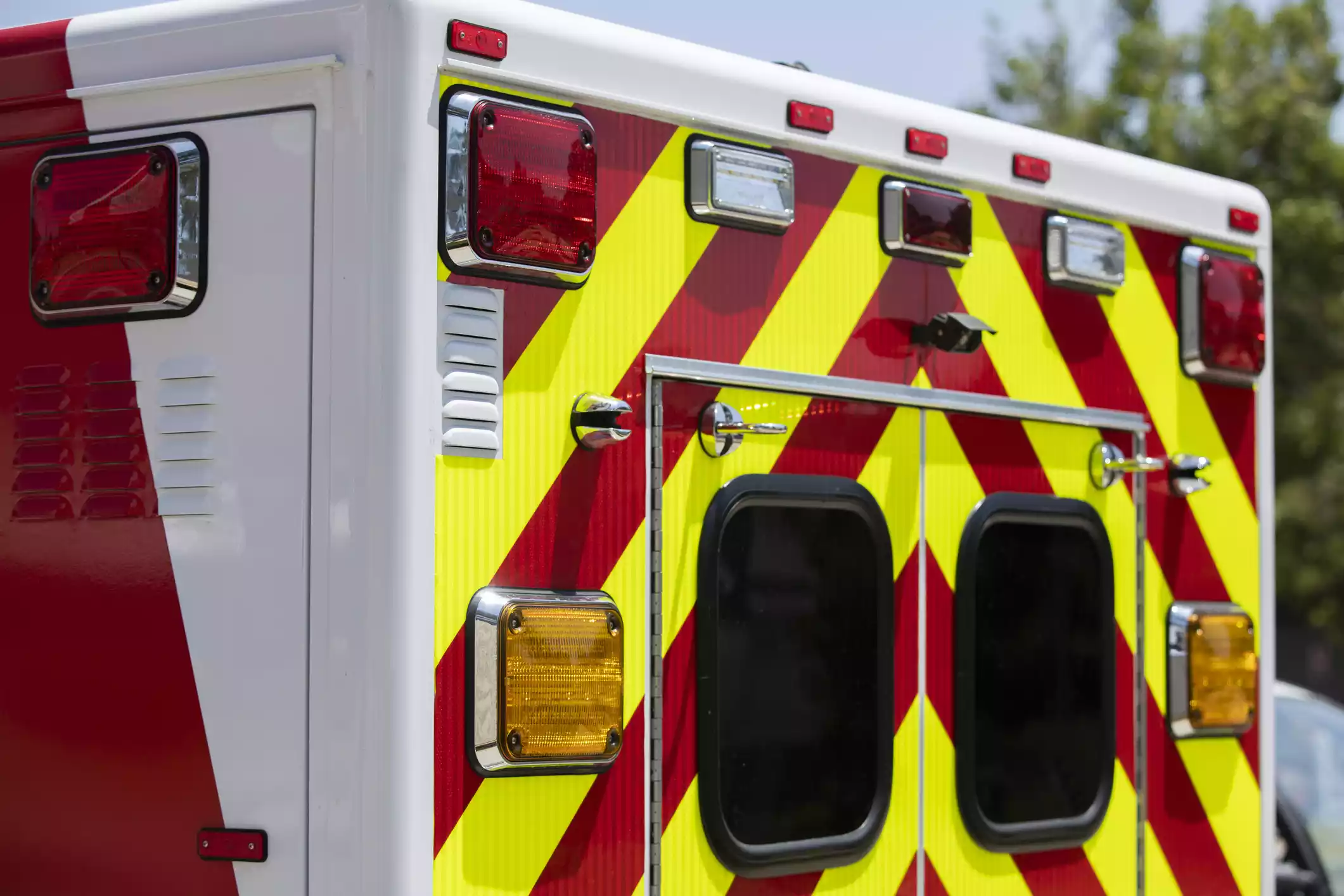
Adding reflective or conspicuity tape can help ensure other drivers are aware of the ambulance, whether it’s running Code 3 or without lights and sirens. according to a 2009 Emergency Vehicle Visibility and Conspicuity Study.
While there’s no NHTSA requirement for conspicuity tape for ambulances as well as other vehicles that don’t fall in the 80”-wide/10,000-lbs or more weight category, it’s still worth doing, says 3M, as a cost-effective way to increase vehicle visibility.
Where to Place Reflective Tape
If you’re considering adding reflective tape to your ambulance fleet, here are some tips from EMS1.com and the Best Practices report to achieve maximum results.
- Place it low enough to achieve optimal interaction with the headlights of the approaching vehicles.
- Add contour markers that outline the emergency vehicle’s overall size and shape to increase visibility.
- Apply retroreflective markings to the insides of ambulance box doors, apparatus cab doors, and swing-out compartment doors to highlight them when open.
- Use conspicuity tape with clearly identifiable logos or graphics to help other drivers recognize it as an emergency vehicle.
In 2013, National Fire Protection Association (NFPA) included Ambulance Chevron Striping guidelines in its Standard for Automotive Ambulances. Adding pre-cut reflective chevrons on the rear doors has been shown to improve visibility and safety for ambulances.
What To Look for When Choosing Reflective Tape
When selecting reflective tape, you want one that will achieve maximum benefit and outlast cheaper brands. 3M recommends choosing reflective tape that meets the following criteria:
- Provides bright, vivid retroreflectivity at wide angles for maximum visibility day and night
- Has a strong adhesive to ensure that it remains affixed to the vehicle, regardless of the environmental conditions or climate impact
- Is made of durable materials that will resist weather, dirt and aging.
Where to Find the Right Reflective Tape and Chevrons
Briargate Supply is an industry leader in premium DOT approved reflective tape, including Reflective DOT-C2 Logo Tape. Check our product list to find the tape that meets your needs.
And if you’ve avoided adding chevrons to your ambulances because you dreaded all the cutting, trimming and adjusting to make them fit, we have pre-made chevron kits for the most common fleet vehicles. Contact us and we’ll be happy to develop one that fits your ambulance.